Where Discarded Sarees Find New Stories: A Day at Udgam Handicrafts
August 06, 2026 by Anjali Bhagabati
A day at Udgam Handicrafts in Mumbai, where discarded sarees become bags, pouches and jackets — and women build livelihoods, confidence and new possibilities for themselves.
A little context before I begin
On August 6, I visited Udgam Handicrafts in Mumbai, a social enterprise that works with women artisans from underserved communities, helping them build livelihoods through tailoring and creative upcycling. Udgam Handicrafts also uses Avni, the open-source digital platform I work with, to manage their data collection and tracking.
My visit was an opportunity to see this collaboration beyond meetings, requirements, and screens — to understand how Avni is actually being used on the ground, meet the artisans, and experience Udgam's work firsthand.
What I expected to be a visit largely about technology turned into something much more personal. It became a day of discovering creativity, confidence, discarded sarees finding new purpose, and women creating new possibilities for themselves.
And the day began in a very Mumbai way.
August 6. I was sitting in an auto, rushing through Mumbai traffic, trying to reach Udgam on time while finishing a vada pav on the way.
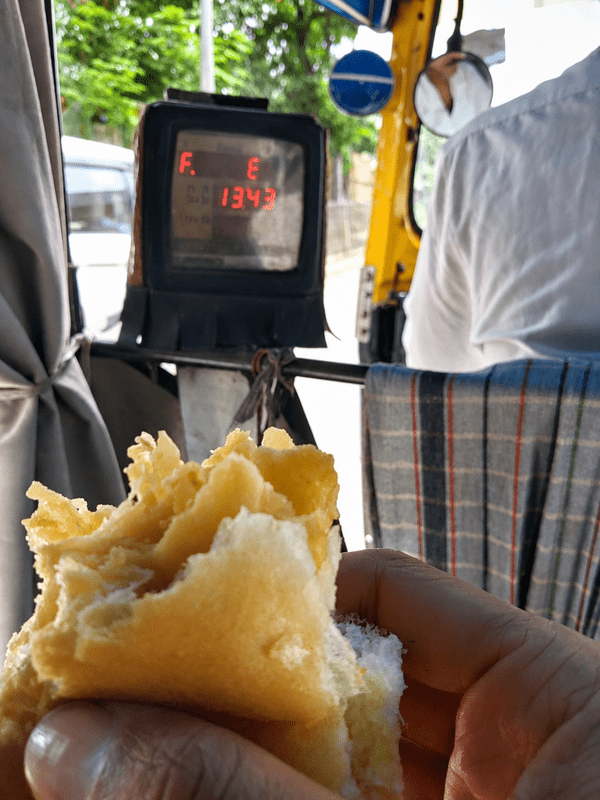
At that point, my only thought was, I hope I'm not late.
I had no idea that a few hours later, I would leave Udgam thinking about much more than the Avni app I had gone there to see.
Seeing Possibility in What We Discard
A discarded saree lay spread across the cutting table in front of me.
For most of us, that would probably be the end of its story. It had been worn, used, perhaps passed on, and finally discarded.
At Udgam Handicrafts, it was just the beginning.
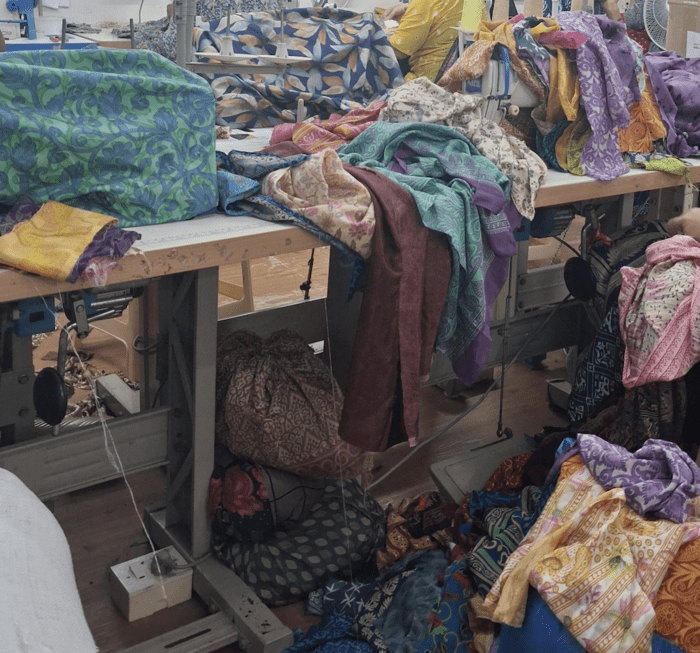
I watched as the saree was inspected, carefully layered and cut. Around me, women were busy at different stages of production — cutting, stitching, checking and finishing. And everywhere I looked, I saw things I would never have imagined could come from discarded sarees.
Bags. Pouches. Bookmarks. Scrunchies. Wallets. Jackets.
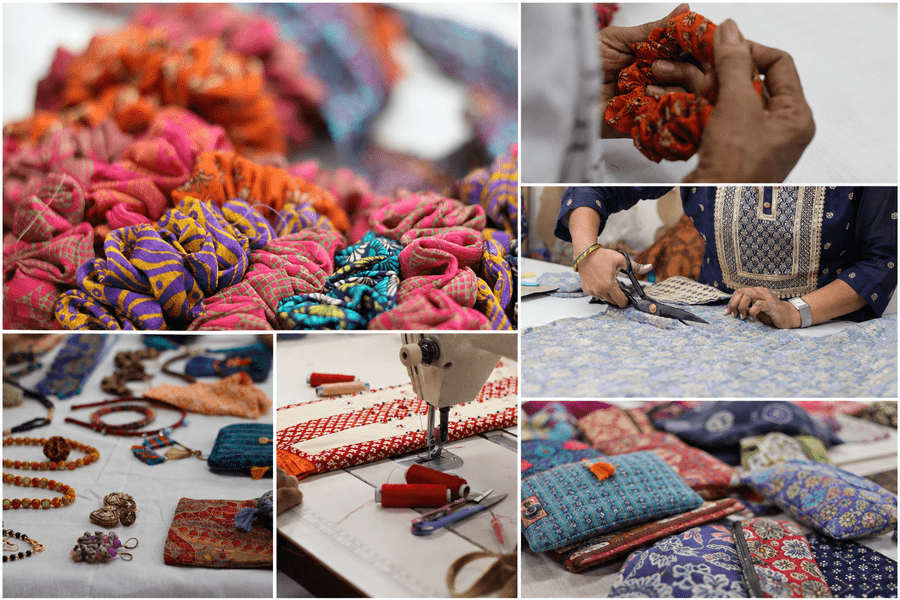
At one point, someone handed me a tiny pouch and told me there was a full-sized reusable bag folded inside it. I opened it, looked at the bag, and then looked back at the tiny pouch, quite convinced I would never get it back in.
Somehow, it went in.
It was such a small thing, but I remember being genuinely amused and amazed by it.
And that feeling stayed with me throughout my visit to Udgam Handicrafts in Mumbai.
I kept discovering possibilities in places where I hadn't thought to look for them.
The story behind the room I was standing in
As I moved around the centre and spoke to the team, I became curious about how the women had reached here.
I learnt that many of them had first come into this journey through tailoring training. But knowing how to stitch doesn't automatically mean you can earn from it.
You still need work. You need customers. You need space. And you need an opportunity that can fit around children, household responsibilities and everything else life demands.
That really stayed with me.
We talk so much about skill development, but standing there, I realised that teaching someone a skill is only the beginning.
The real difference comes when someone gets a chance to use that skill.
That is what this space seemed to have created — a bridge between I know how to do this and I can earn because I know how to do this.
And then, as I started meeting the women behind the work, that thought became even more real.
A little push can take you miles
One of the stories I loved hearing was Akbari's.
When Akbari first came to the centre, she didn't know tailoring. She was simply willing to work.
Give me whatever work there is.
She started with washing.
Then she learnt something else. Took on another responsibility. Became better at it. Took on more.
Today, she manages the cutting team.
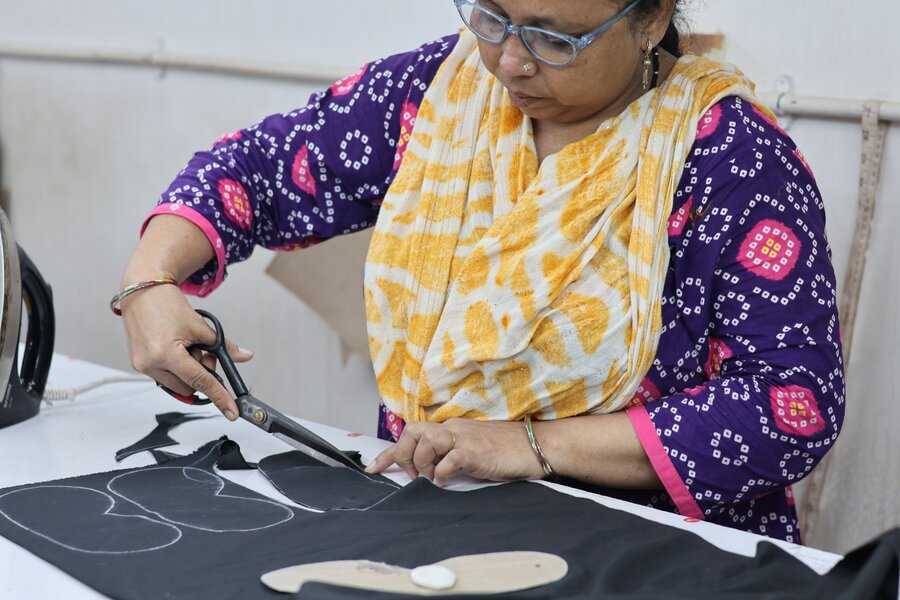
I watched her confidently cut through layers of fabric with large scissors. There was so much precision in what she was doing that it was difficult to imagine that she had once started here without knowing how to stitch.
Her story made me think about how we sometimes imagine that changing someone's life requires one big opportunity.
Maybe it doesn't.
Maybe sometimes it starts with someone simply giving you a chance.
A little push can take you miles.
And in another story I heard that day, I learnt about Rubina, who got the opportunity to travel to Italy after the organisation received international recognition through a global sustainability award. She gave her speech in Hindi in front of an audience of more than 200 people and received a standing ovation from people from the fashion industry.
I tried to imagine that moment.
To start your journey in a community in Mumbai, learn a craft, create something with your own hands and one day have that work take you to another country.
Work that makes space for life
As I spent more time at the centre, I also began noticing the smaller things that make this opportunity possible.
The centre is open from 10 AM to 8 PM, but the women don't have to fit themselves into one rigid shift.
They choose their working hours around their lives.
Some come after finishing household work. Some plan their hours around their children's school timings. Some work in the morning, others later in the day.
It may sound like a small operational decision, but I don't think it is.
For many women, the question isn't simply Do I want to work?
It is How do I work while managing everything else that is expected of me?
I was also told that as some women started earning more consistently, something interesting began happening at home. Family members started sharing responsibilities that earlier rested entirely on the women.
That made me smile and feel so proud!
Because their work wasn't only changing what happened inside the centre. It was slowly changing things at home too.
And then came my Avni moment
Somewhere in the middle of all this, I came back to one of the reasons I was there in the first place.
I wanted to understand whether Avni was actually helping.
Was it making data collection easier? Was it useful to the women? Was it making their day-to-day work simpler?
And then I watched one of the artisans take out a phone and start entering her production information.
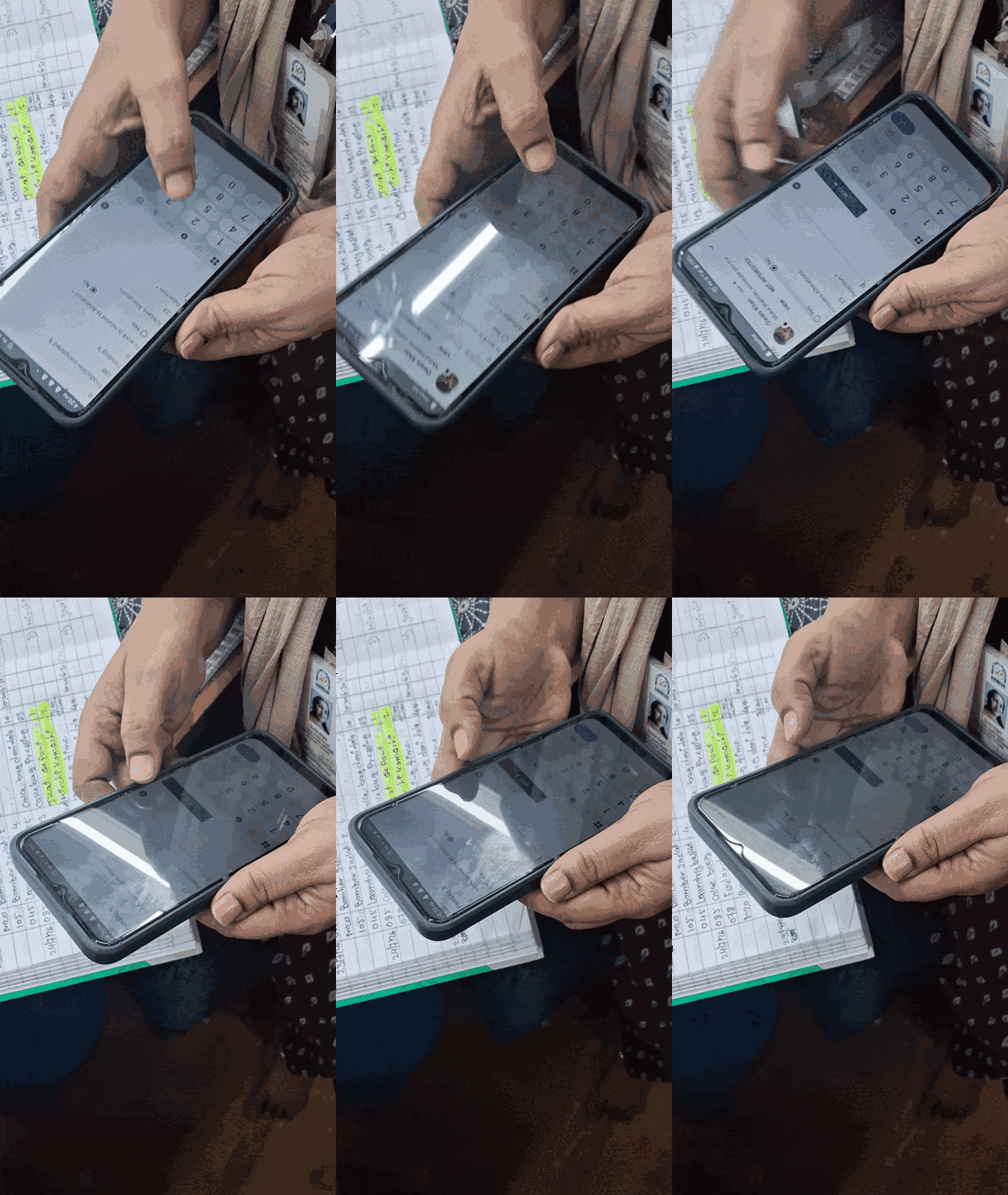
Someone told me that some of the women using Avni today had once barely known how to use a smartphone.
That genuinely amazed me.
Before Avni, the team shared that they were managing information across around 23 different Excel sheets and registers. Production details, artisan information, orders, and other programme data were captured in different places. Bringing all of it together meant going back and forth between registers and Excel sheets, manually consolidating information, and spending hours trying to get a complete picture.
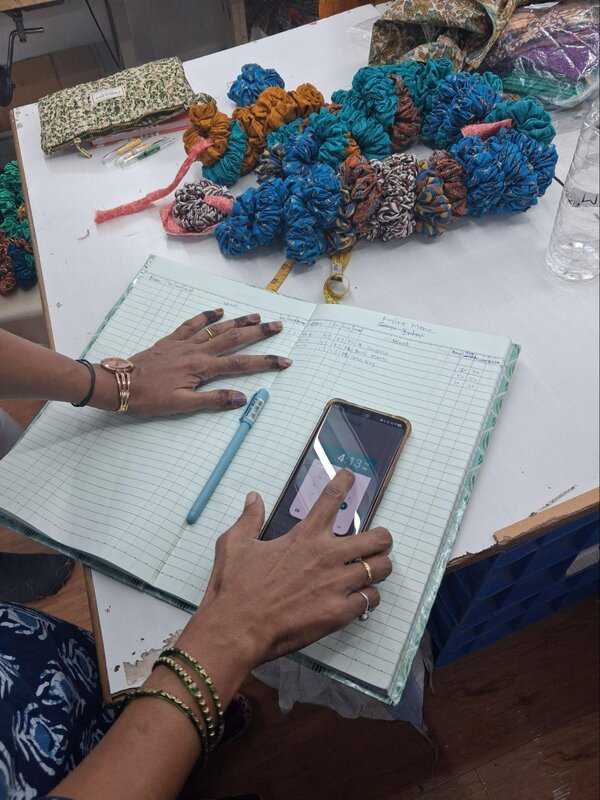
They could see their orders, check what had been newly added, see updates and know where production stood without always having to wait for someone else to tell them.
And nobody was making a big deal about it.
They were simply using it.
For me, that was probably the best feedback Avni could receive.
Because perhaps successful technology adoption isn't when someone says, Look how well I can use this app.
It is when the app stops feeling like technology at all.
It simply becomes part of how you work.
The workflow has also been designed around the people actually using it. Artisan names can be searched instead of repeatedly typed. Photos help with identification. Options reduce spelling errors.
When an artisan records how much time she spends making a product, that information can help calculate what she should earn.
If something that normally takes two and a half hours is consistently taking much longer, it might point towards a skill gap — and an opportunity for training.
And if a production entry is missed, someone's work may not be accounted for correctly.
Suddenly, a missing record wasn't just a data-quality issue.
It could affect someone's income. That made Avni feel very different to me in that room.
I work with forms, requirements, reports and dashboards all the time. It is easy for those things to become just another part of the workday.
But here, a number on a screen could represent someone's time.
Someone's skill.
Someone's effort.
Someone's income.
That was probably my biggest Avni moment of the day.
There was so much more happening around the work
The longer I stayed, the more I realised that stitching was only one part of the story.
I heard about women who begin their days around 5 AM, finish their household work and sometimes arrive at the centre without having eaten breakfast.
I learnt about the nutrition support provided to women and children by Udgam Handicrafts in support of Animedh Charitable Trust.
I saw how the centre also creates space for the artisans' children, who can come in around their school timings and have access to learning support, a library, games, counselling and career guidance.
I went there as an observer. I didn't quite leave as one.
Towards the end of the visit, I found myself thinking about something I hadn't expected.
Where do I fit into this journey?
It is easy to visit a place like Udgam, feel inspired, take a few photographs, write about it and move on.
But I didn't want this visit to end there.
I kept thinking about what I could contribute.
Could we make Avni even simpler for the next woman who has never used an app?
Could we make sure a missed data entry doesn't become a missed payment?
Could the data eventually tell us more than how many products were made — could it help us understand how someone's skills, confidence, responsibilities and income changed over the years?
Could I tell more people about their work?
Could I buy something made here, gift it to someone, or connect …
I came looking at technology. I left thinking about possibility.
What else can a discarded saree become?
Something useful again.
Something beautiful again.
Something valuable again.
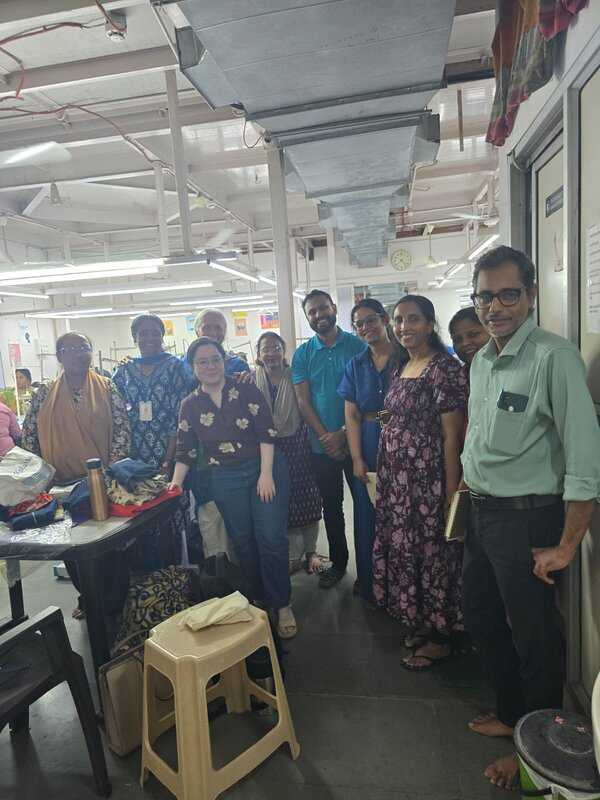
What I will remember most about Udgam — it doesn't just give discarded sarees a new story; it creates space for women to write new stories of their own.