Visiting KhelMel, Raigarh: Rain, Kho-Kho, and the Girls Who Run the Ground
July 20, 2026 by Syed Habeeb
A visit to KhelMel in Raigarh — a founder's story, a kho-kho ground borrowed from a government school, and the girl volunteers who keep the whole thing running.
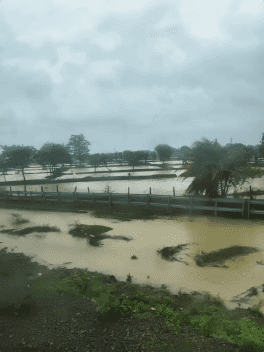
Rain came and went the whole day I was in Raigarh, on and off, never quite stopping for long. Fields on the way in were sitting under standing water. And in the breaks between showers, on a muddy government school ground, sixteen kids ran kho-kho drills like the weather had nothing to do with them.
This is an account of that visit to KhelMel: a founder who left Bangalore to build this; a sport that used to be frisbee and is now kho-kho; and a small team of volunteers — mostly teenage girls — doing the unglamorous work that actually makes a programme run.
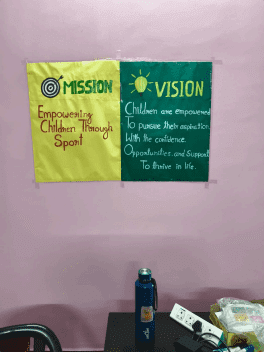
Empowering Children Through Sport
KhelMel's mission and vision are painted on two sheets of cloth taped to the office wall — the mission in yellow and the vision in green, hand-lettered. Empowering children through sport, so that they can pursue their aspirations with confidence, opportunity and support. It reads like something written by people who actually use it, not a line drafted for a funder.
The office itself sits on the outskirts of Raigarh, in a genuinely lovely spot — quiet, green, and nothing like what I expected an NGO field office to look like. The team is small, six people in all, running programmes across three centres: Krishnapur, Barliya and Sambhapuri. KhelMel also works alongside partner organisations in Assam and Bihar, which is a fair amount of ground for six people to cover.
From Frisbee to Kho-Kho
I spent a good part of the afternoon with Kushal, who founded KhelMel. He talked about his time in Bangalore before this and what made him leave a fairly settled life there to build a sport-for-development programme in Chhattisgarh instead. It is one thing to hear that story secondhand and another to hear it from someone still living the decision.
One detail stayed with me: KhelMel did not start with kho-kho. It started with a frisbee. At some point the team made a call to switch to kho-kho instead, presumably because it travels better across the villages they work in — no equipment to lose or replace, just a ground, a circle, and enough kids willing to run.
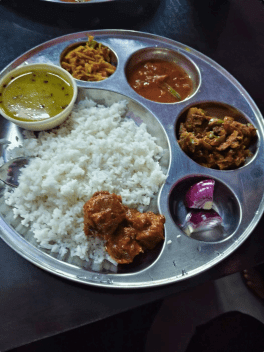
Kushal had lunch arranged for me, and after ten days of vegetarian meals on the earlier leg of this trip, I asked for non-veg without much guilt. It was a good thali and a better conversation.
Later I spoke with Himanshu, who trains the students directly in kho-kho but also in the other side of it: motivation, discipline, and the softer coaching that does not show up in a match score. Srikanth, KhelMel's sports expert, shapes how the sessions themselves are structured across centres, though our schedules did not overlap on this visit.
How a Week Actually Runs
The programme has a rhythm to it. Sessions run four times a week per centre — Wednesday and Saturday for boys, Thursday and Sunday for girls in Krishnapur, and the reverse in Barliya. A Gram Sangathan, a village-level group, handles getting kids on the ground in the first place.
Each session follows the same shape: a short discussion on how the day has been, a warm-up, skills practice, game tactics, and space for counselling if something is on a child's mind. Afterwards, a 15-to-20-minute debrief — Himanshu runs this for the boys and Preeti for the girls — on how the session actually felt, not just how it went.
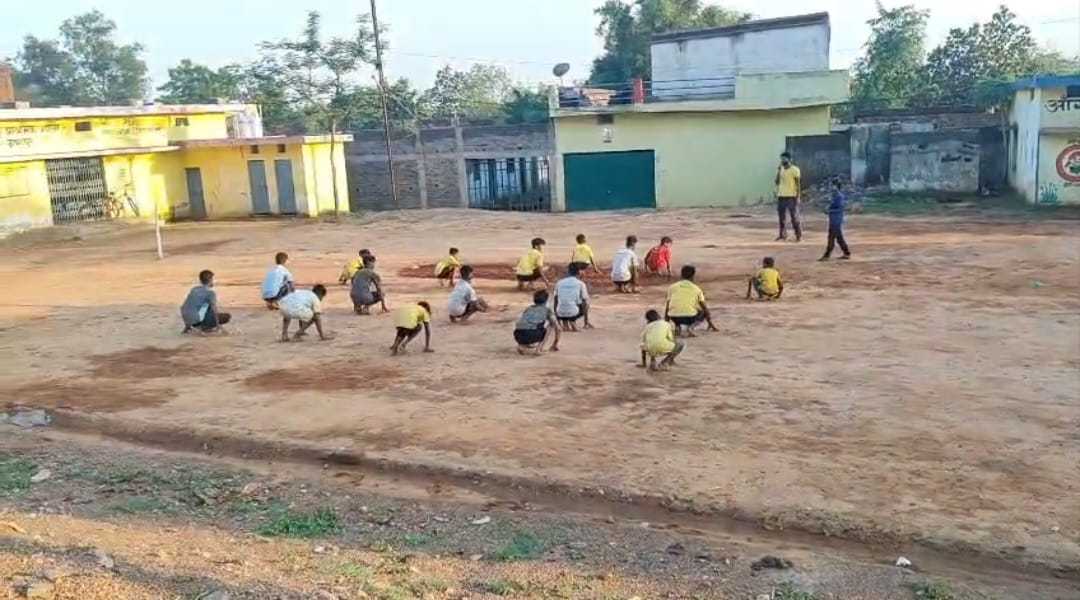
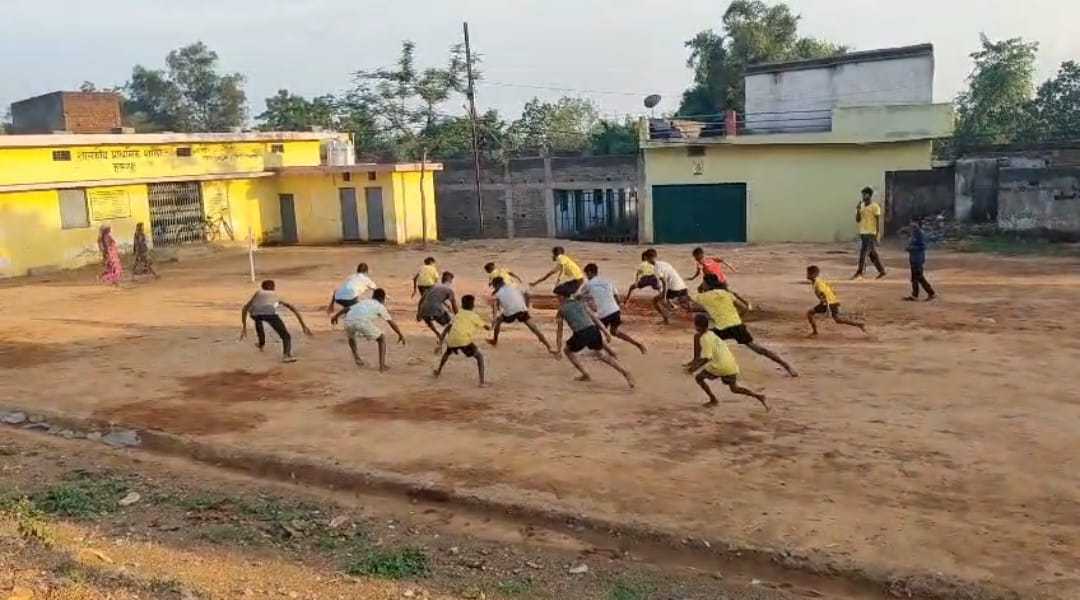
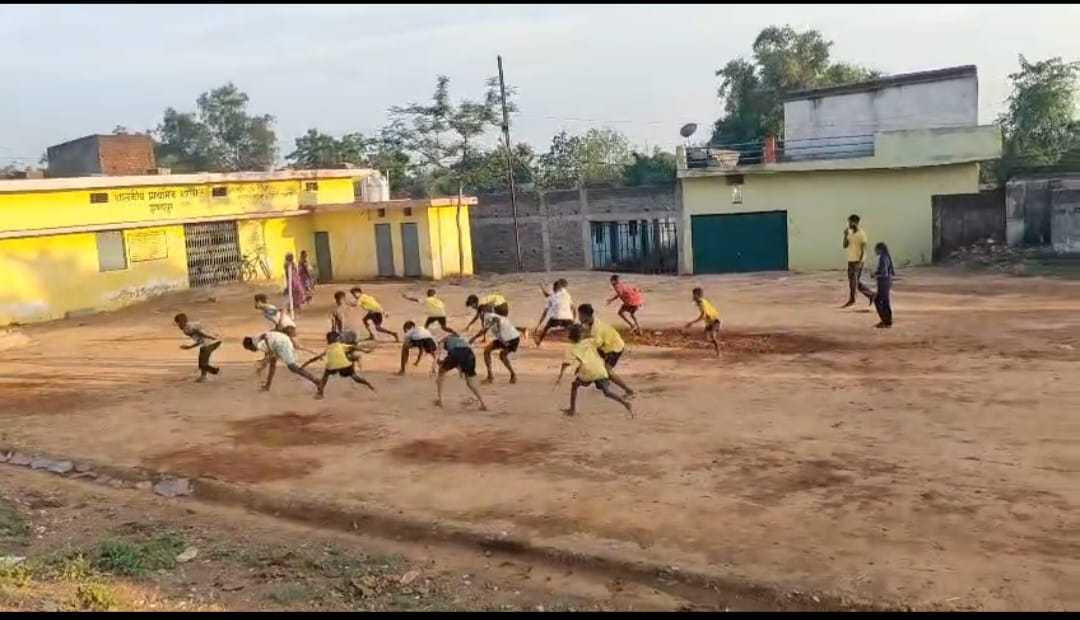
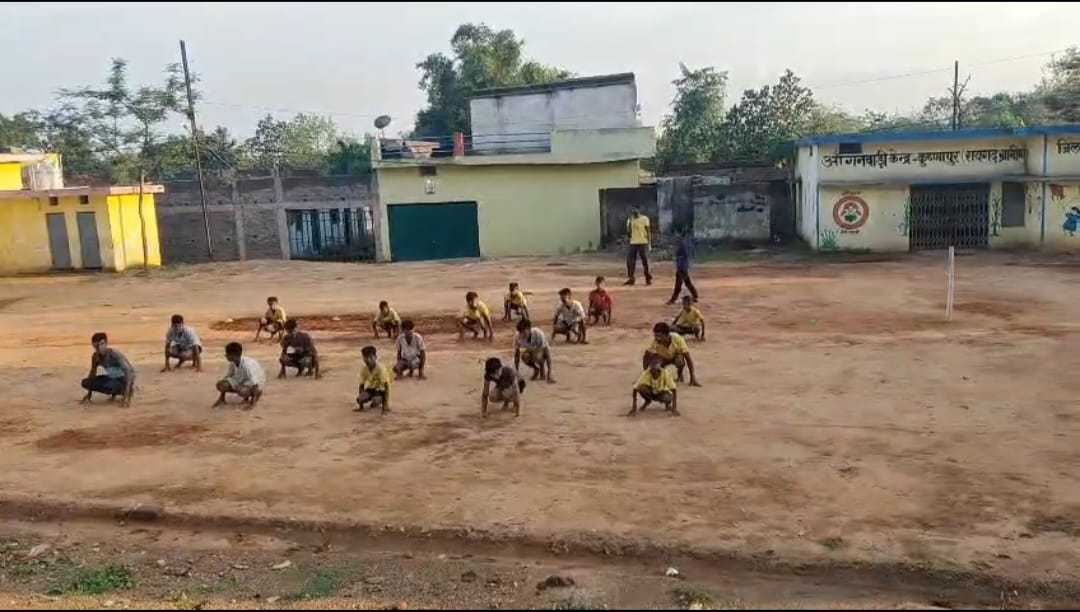
Kho-kho practice at the government school ground, Krishnapur
I watched a session at the government school ground in Krishnapur — the same yellow building, the same patch of open dirt, now soaked through from the rain. It did not seem to matter. Sixteen boys ran their drills, squatting and sprinting on cue, coaches calling out from the side.
The Ones Who Show Up Early
If there is one thing from this visit I want to stay with, it is the volunteers.
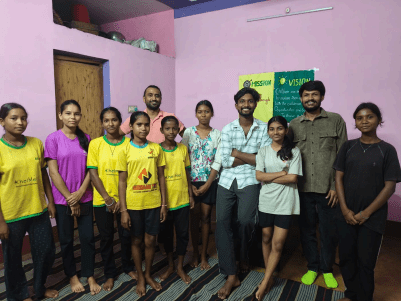
Most of them are girls, still in their teens. They mobilise the other kids, show up to check in on the ones who have not come in a while, motivate people to keep attending, and clean the ground before and after every session — before, so it is playable, and after, because nobody else is going to. Watching that at their age was, honestly, a little humbling. They just do it, week after week, because the programme does not run without them.
We sat down with a group of KhelMel's volunteers after the session, and somewhere in that conversation, someone ended up playing a round of Mafia with them, which is its own kind of trust exercise, and they were sharper at it than most adults I know.
But the conversation also gave us a better sense of what keeps these volunteers invested in the work. They spoke about feeling appreciated within KhelMel and about the value of being trusted with responsibilities in the programme. Much of their work happens beyond the session itself — mobilising students, visiting homes, following up with families, and building relationships that make it possible for the programme to reach the children it is meant to serve.
There is also a less visible part of that work: making sure all the information they gather along the way does not get lost. The volunteers are often the ones generating and collecting this information in the first place, and Avni helps KhelMel maintain a record of what they have mobilised and the work they have done. Instead of adding another layer of paperwork for volunteers, it makes the process of recording and managing that information a little less cumbersome.
That matters because the volunteers' time is better spent with students and families than reconstructing data later. What I heard from them was not a story about technology transforming their work overnight. It was something more practical: when the system fits into the way they already work, it takes a little of the administrative weight off their shoulders and helps make the work they are already doing more visible and easier to follow.
Where Avni Fits
Avni is used across all of KhelMel's centres — Krishnapur, Barliya and Sambhapuri. At KhelMel, Avni is not simply a tool for recording who attended a session. It is part of the organisation's day-to-day field workflow — helping teams capture information from the baseline through home visits, sessions, monitoring and reflections, right where the work happens.
The user count is small, smaller than most of our deployments, but the influence on the ground is not small at all. It is used the way it should be: in the middle of a session, on a phone, right there on the ground, not filled in later from memory back at the office.


It is a useful reminder that scale and impact are not the same measurement. Six people, three centres, and a modest number of Avni users, and yet the programme reaches deep enough into these villages that teenage girls volunteer their evenings to keep it running.
What I Took Away
Small teams can carry a lot. Six people, three centres, and two states of partner reach. The constraint is real, and so is what they get done inside it.
The volunteers are in the programme. Not a footnote to it. Mobilisation, motivation and upkeep of the ground all sit with a handful of teenage volunteers, and none of it happens without them.
Low usage numbers do not mean low impact. Avni's footprint at KhelMel is small by user count and outsized by what it enables on the ground.
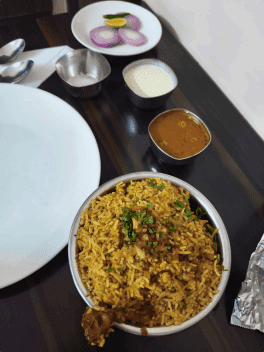
I ended the day, and the ten days before it, with an authentic Chhattisgarhi biryani — the first proper non-veg meal after a long, deliberate stretch of vegetarian food, eaten between one shower and the next. A fitting way to close out the trip.
Thank you to Kushal, Himanshu and Preeti for the time and the conversation, and to the volunteers at Krishnapur for the round of Mafia and for showing me, without saying much at all, what actually keeps a programme like this alive.