Visiting JSS, Ganiyari: Deer, Discharge Summaries, and a Village With No Signal
July 16, 2026 by Syed Habeeb
A week on the ground at Jan Swasthya Sahyog in rural Chhattisgarh — the OPD, the forest sub-centres, the people who use Avni every day, and a two-year-old who made the case for prevention better than any slide could.
Until this trip, the development sector was something I had only read about. I work on Avni, which means I work on software used by health workers in villages I had never been to, for problems I had mostly met as fields in a form. I was accompanied by my colleague Mohit and his family on a visit to Jan Swasthya Sahyog in Ganiyari. Not for a specific deliverable. Just to see the other end of the thing we build.
This is an account of that week: a hospital, a forest, an OPD room I did not want to leave, a village where the phone showed no bars at all, and a two-year-old who had been diagnosed with diabetes. That last one is really what this blog is about. Everything else is how I got there.
Care as a Right, Not a Privilege
Jan Swasthya Sahyog (JSS) was started in the late 1990s by a group of doctors, many of them trained at AIIMS, who decided to build a health system for rural and tribal central India instead of practising in a city. Since 2000 they have run a referral centre near Ganiyari village in Bilaspur district, Chhattisgarh. The people they serve — largely Gond and Baiga families from forest and forest-fringe villages — are the ones the health system usually reaches last, if at all.
The work spreads wider than the hospital:
- The referral centre at Ganiyari has an outpatient clinic, a ward, operation theatres, a rural laboratory, X-ray and ultrasound, and a low-cost pharmacy, all priced so that a family does not have to choose between a diagnosis and a week's food.
- Sub-centre clinics are outreach clinics run deep inside forest and forest-fringe areas, with a full team travelling out to them so that care does not depend on a patient making a 60-kilometre journey.
- Community health and nutrition: village health workers; counselling that includes the whole household; and phulwaris, the day-care centres where the youngest children are fed and looked after through the day.
- An appropriate technology workshop — where hospital equipment is repaired and, when it does not exist at a price that works, simply built.
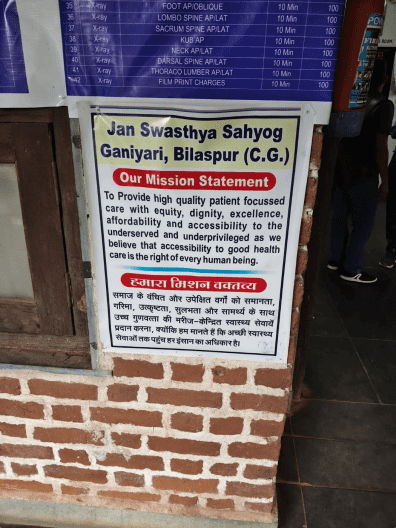
The mission statement is up on the wall near the entrance, in English and Hindi: high-quality, patient-focused care with equity and dignity, because access to good healthcare is the right of every human being. Mission statements are cheap. What struck me over the next few days was how literally this one gets applied — in the rate card hanging right above it, in the way patients and their families are spoken to, in what the team chooses to build in-house rather than buy.
Getting There, and a Detour to Deer
We reached Bilaspur a day before the work started, which left an afternoon free, so we went to Kanan Pendari Zoological Garden. It is a large, wooded park, and we went around it on safari. Mostly deer — herds of them, entirely uninterested in us.
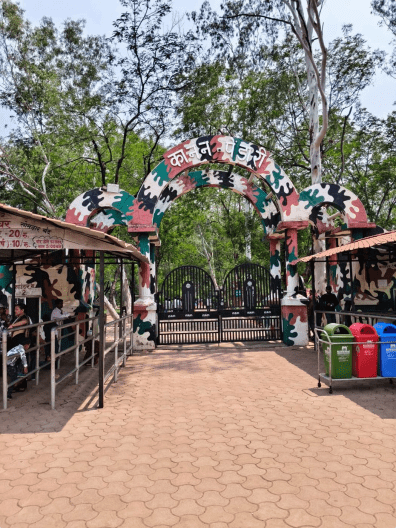
I did not think much of it at the time. It turned out to be a decent orientation: the forest we drove through on that safari was the same landscape the sub-centres sit inside, except that out there it comes with a tiger reserve and considerably fewer railings.
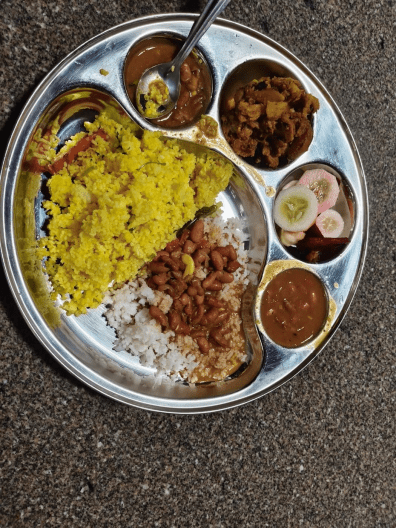
The other thing I should mention early, because it shaped every day after, is the food. The JSS mess serves simple, local, properly nutritious meals — dal, rice, rajma, a seasonal vegetable, and salad on a steel thali. After a week of listening to doctors talk about diet, the consistency was hard to miss. What the campus eats is what the doctors recommend.
Days in the OPD With Dr Gaja
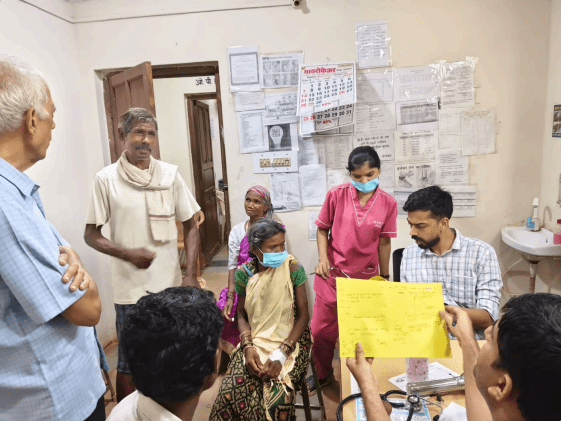
I spent a few meetings and a few hours with Dr Gaja, including time in the consultation room itself.
Sitting in on an OPD session is a different kind of learning. What people come in with here, and how late they come in with it, does not resemble illness as I know it from a city. Distance, cost and a lost day of wages show up in the case history long before the diagnosis does. Patients arrive with the whole family, and the conversation happens with all of them at once, in the same room, in the same language.
Dr Gaja also took me through Bahmni end to end: registration, consultation notes, investigations, pharmacy, admission, discharge summary. The full patient journey, as it gets recorded. Alongside it, Odoo handles pharmacy stock, so what a doctor prescribes and what the pharmacy actually holds stay tied together. Separately, we had a long and genuinely useful conversation with Dr Pankaj about how JSS runs as an organisation — the programmes, the people, and how the clinical and community sides feed each other.
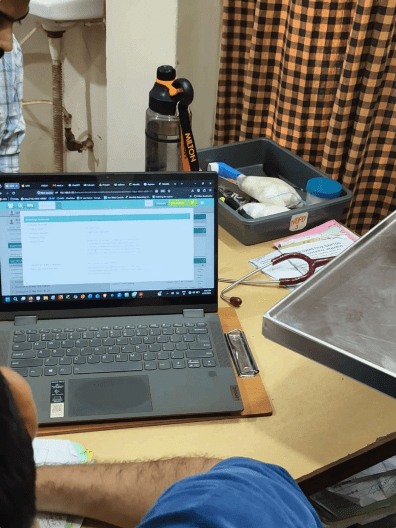
The point Dr Gaja kept coming back to was the Bahmni–Avni integration. A person seen by a health worker in a village and the same person seen at the Ganiyari OPD should not be two unrelated records. Right now the story of that person breaks at the hospital gate, and both systems are less useful for it. Of everything on my list from this trip, this is the one with the most weight behind it.
The Case for Prevention
Then came the session that I have not been able to shake.
Dr Kamta, a nutritionist at JSS, runs counselling on a simple premise: treat the household, not just the patient. Family members sit in, because the diet, the routine and the habits that produce the illness are shared. Prevention over cure, taken seriously enough to change who is in the room.
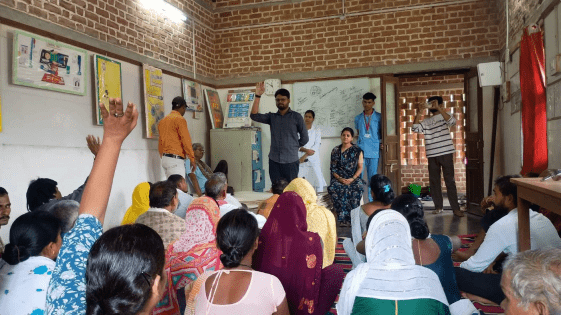
In that session there was a two-year-old who had been diagnosed with diabetes. Two.
I have spent a fair amount of my life around the idea that these are lifestyle problems, which quietly implies that someone, somewhere, chose wrong. Sitting in that room, that framing fell apart. The gap is not willpower, it is information. Many families have simply never been told what keeps a person well, and until someone like Dr Kamta walks into the village, nobody is in a position to tell them.
What I liked was how concrete his advice was. Not a diet plan nobody can afford, but a few daily exercises and a better roti — wheat flour with ground flaxseed and roasted chana mixed in. Small changes that fit inside what a household already cooks and what it can already buy.
The AppTech Workshop
A short walk from the OPD is the appropriate technology workshop, which was one of the quiet highlights of the trip. Hospital equipment gets maintained and repaired here, and where something does not exist at a price that makes sense, it gets built — including portable power units assembled from a battery, an inverter and a charger, so that a clinic or a field visit is not at the mercy of the power supply.
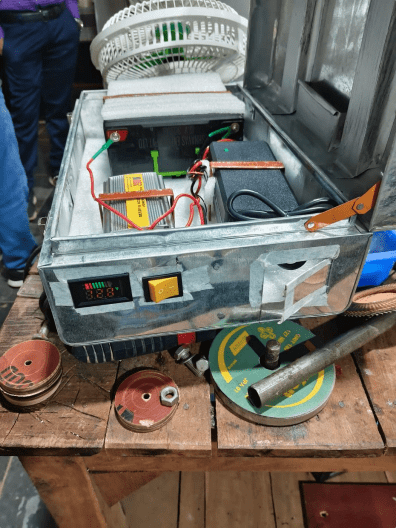
It is the same instinct as everything else at JSS, applied to hardware instead of medicine.
Shivtarai, Bamhni, and the Road Between
We travelled out to the JSS sub-centres at Shivtarai and Bamhni. The road between them runs through tiger reserve forest and is, without exaggeration, one of the most beautiful drives I have taken — trees, hills, and almost nobody.
At Bamhni we visited a phulwari and also met a snake, which the team treated as an unremarkable feature of the commute. I did not.
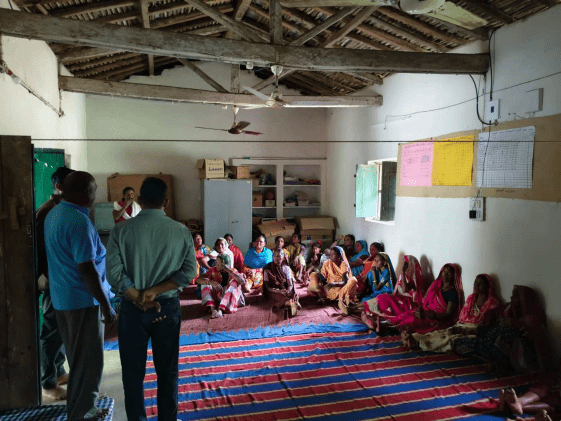
At both centres we met the health workers doing the harder half of this work: mobilising people, running sessions, following up on households, explaining the same thing patiently for the tenth time to someone who has every reason to be sceptical. Watching a village meeting come together in a room with no projector and no slides is a useful correction for anyone who designs software in an office.
Where the Network Ends
This is also where Avni earns its place.
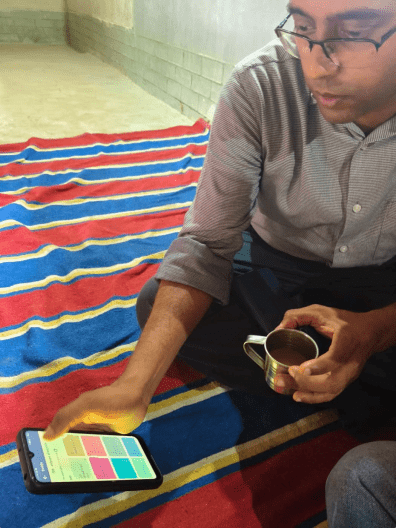
These are among the remotest areas JSS works in, and for long stretches there is no network at all. No signal, no fallback, no walking a little further to find a bar. Data gets captured offline, on a phone, on a mat, or in the middle of a village and syncs later, whenever a signal turns up.
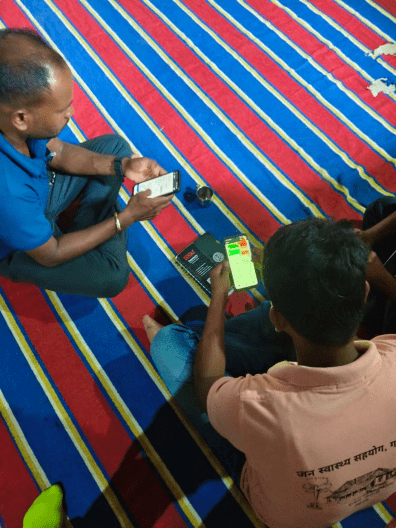
For the programme team, that means monitoring and evaluation no longer wait for paper registers to travel back to Ganiyari. For the health worker, it means one less thing to redo at the end of a long day on foot. I have written and read that sentence in a hundred product descriptions. Watching it happen, on a phone screen, in a room with one tube light and no connectivity, lands very differently.
On the ground, the change is real.
Sitting With the People Who Use It
Back at the hospital, we sat down with the senior health workers from all three sub-centres. We went through the problems they were hitting in Avni; fixed what could be fixed on the spot; and took their questions — all of them.
I also spent time explaining why Avni exists: that it is built for the person standing in the village, not only for the report that leaves it. That single point changed the tone of the room more than I expected. People who had been listing complaints started describing what they wished the app would do, which is a much more useful conversation.
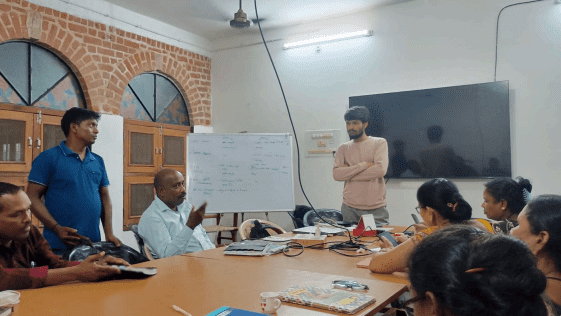
We then sat with the MCH team on their experience of Bahmni — what works, what gets in the way, and what they would change. Between the two sessions, we came away with feedback far more specific than anything we would have arrived at over a call.
What the Field Taught Me
Three things I did not have before this week:
Context is not optional. A form field that costs four seconds in an office costs a great deal more in a village hall, at the end of a walk, with a queue waiting and the light going. That difference belongs in our design conversations, not as an afterthought.
Offline is the whole game. Not a feature line. In Shivtarai and Bamhni, an app that needs a network is an app that does not exist.
The distance worth closing is informational. Not only the distance to the hospital but also the distance between what a family knows about staying well and what anyone has ever told them. Every record that reaches the right person shortens it a little.
Gadh Kalewa, and the Way Home
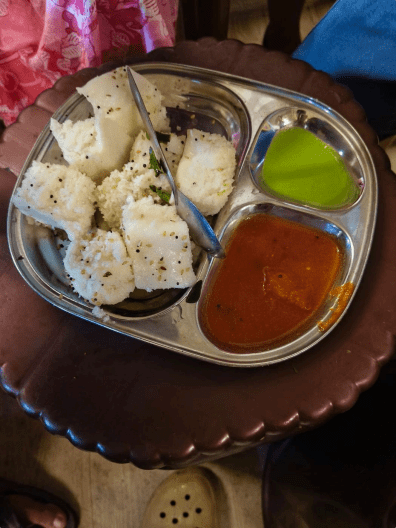
On the last day we ate at Gadh Kalewa, where the menu is entirely traditional Chhattisgarhi — steamed rice-flour preparations, a green chutney and a red one that I respected from a safe distance. A good, unhurried end to the week.
Closing Thoughts
One week, one hospital, two forest sub-centres, one snake, a great many deer, and a two-year-old I am still thinking about.
I came in expecting to learn how an NGO works. I did, but the thing I actually took home was smaller and more useful: a clear picture of the person on the other side of the screen. She walks to the village, works through the afternoon, has no signal for most of it, and still gets the data in. Whatever we ship next should be built for her day, not ours.
Thank you to Dr Gaja, Dr Pankaj and Dr Kamta for the time and patience. The health workers at Ganiyari, Shivtarai and Bamhni for the honesty; to everyone at JSS for the meals and the welcome; and to Mohit and his family for the company.
Onwards — with the Bahmni integration and a much better sense of why it matters.