The Stories That Never Reach Us
July 04, 2026 by Mohit Kumar
What two days in the forests of Anuppur taught me about healthcare, humility and hope.
The train from Bilaspur had barely gathered speed when the city slowly disappeared behind us.
Concrete gave way to green. Then more green. And then forests. Dense forests.
The kind that makes you instinctively look out of the window and stop scrolling through your phone.
For almost two hours I sat quietly watching endless stretches of trees roll past. It felt surreal.
I had travelled this route to visit Jan Swasthya Sahyog (JSS) in Anuppur, a name I had heard many times in public health circles. I expected to learn about innovative healthcare models, community health workers, government partnerships and technology.
I came back with something completely different.
I came back with stories.
Stories that rarely make newspaper headlines.
Stories that never trend on social media.
Stories that quietly keep thousands of people alive.
Where Innovation Actually Begins
Rahul was waiting for us when we reached Anuppur. An IIT-BHU graduate. The kind of profile that, in today's world, usually ends with a multinational company, a consulting firm or a startup. Instead, he had chosen public health.
As we settled ourselves in Anuppur, Rahul began explaining what JSS had built over the last two decades.
At first it sounded almost unbelievable.
Many of the ideas that today feel integral to India's rural health architecture had either emerged from or been deeply influenced by the work done at JSS.
- Village health workers evolving into what we now know as ASHAs.
- Sub-centres gradually becoming Health and Wellness Centres.
- Nurses being trained into Community Health Officers.
- Training modules for doctors.
- Models for strengthening district health systems.
- Community-based care for epilepsy.
- Large-scale work on sickle cell disease that later informed broader government programmes.
The more Rahul spoke, the more one realization stayed with me.
Innovation doesn't always begin inside ministries. Sometimes it begins in forgotten villages.
Sometimes governments simply recognize what has already proven to work.
That, perhaps, is one of JSS's greatest contributions—not merely treating patients, but quietly influencing how India thinks about public health. Its work has consistently combined community care, training, research and system design, helping strengthen public health policy over decades.
Stories, Not Presentations
The next few hours were spent meeting members of the JSS team.
One spoke passionately about epilepsy. Another walked us through years of work on sickle cell disease.
These weren't PowerPoint presentations. They were stories of people. Families. Villages. Years of follow-up.
The kind of diseases that don't disappear after a prescription. The kind that requires relationships more than medicines.
Later, we visited the Anuppur district hospital where in one corner of the hospital was a modest room allocated to JSS. No grand infrastructure. No impressive branding.
Just people quietly diagnosing sickle cell disease, ensuring patients entered the healthcare system before complications consumed their lives.
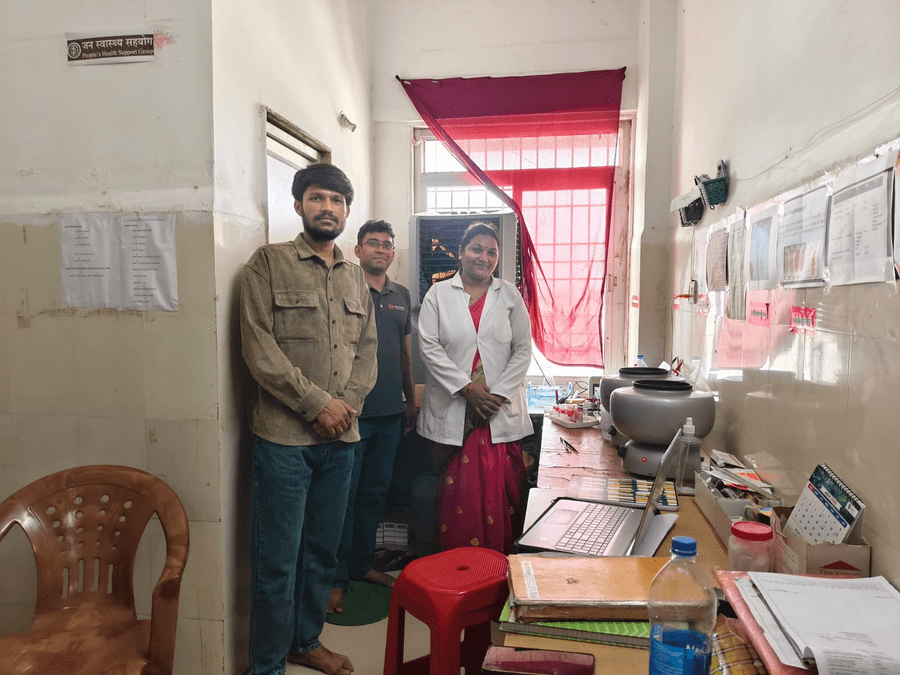
It struck me how many extraordinary things in healthcare happen inside very ordinary rooms.
Deeper into Pushprajgarh
The next morning, we headed deeper into Pushprajgarh.
The roads became narrower. Villages became smaller. Phone signals disappeared. The forests became thicker. It is difficult to appreciate healthcare until you realise how far it has to travel.
One of our first stops was a government school where a Mobile Medical Unit had arrived.
Two health workers had travelled there to conduct consultations. By the time we reached, women from nearby villages had already gathered.
Some had walked for several kilometres. Some carried children. Some simply waited patiently for their turn. There was no rush. No complaints. Just quiet patience.
Medicines were dispensed. Blood pressures checked. Symptoms discussed. Advice given.
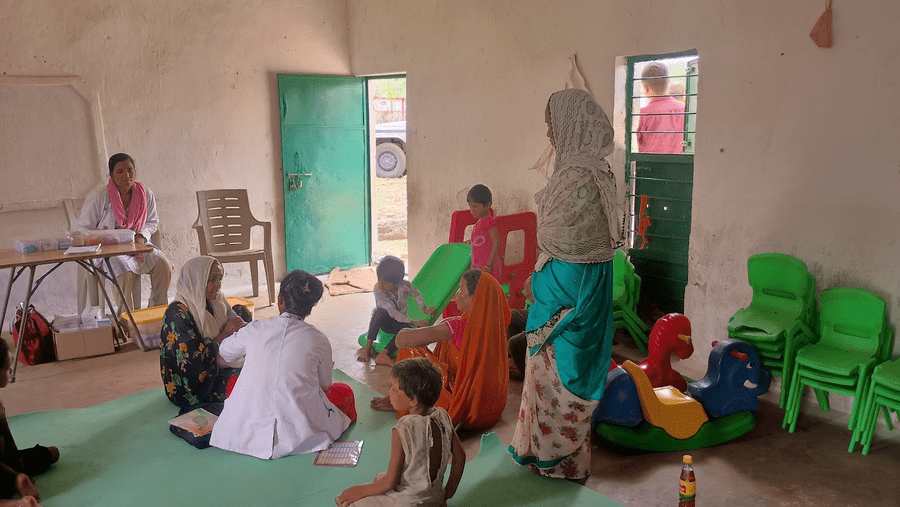
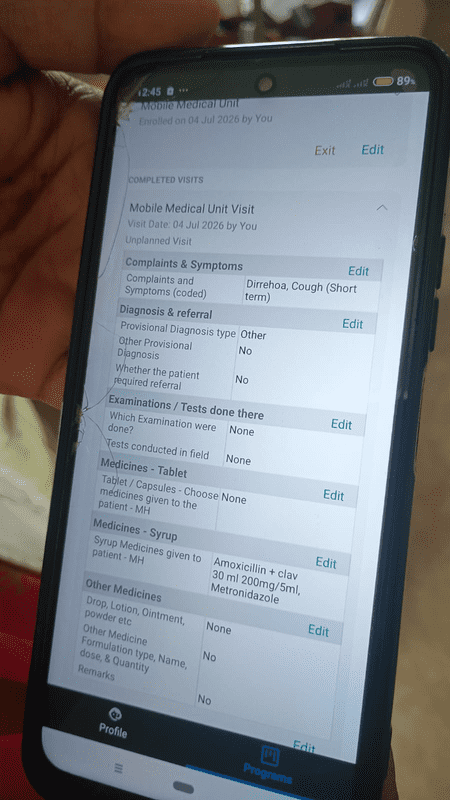
The children, meanwhile, had absolutely no interest in healthcare. They were busy being children. Running. Laughing. Curious about the strangers visiting their school.
Sometimes joy survives despite everything.
The Phulwari Near Ural Waterfall
Our final visit that day was to a Phulwari centre near the beautiful Ural waterfall.
Nothing had prepared me for what I was about to see.
The centre itself was simple. Almost minimal. But every corner reflected care. Ten children were sleeping peacefully together under a large mosquito net. The room was spotless. Everything had its place.
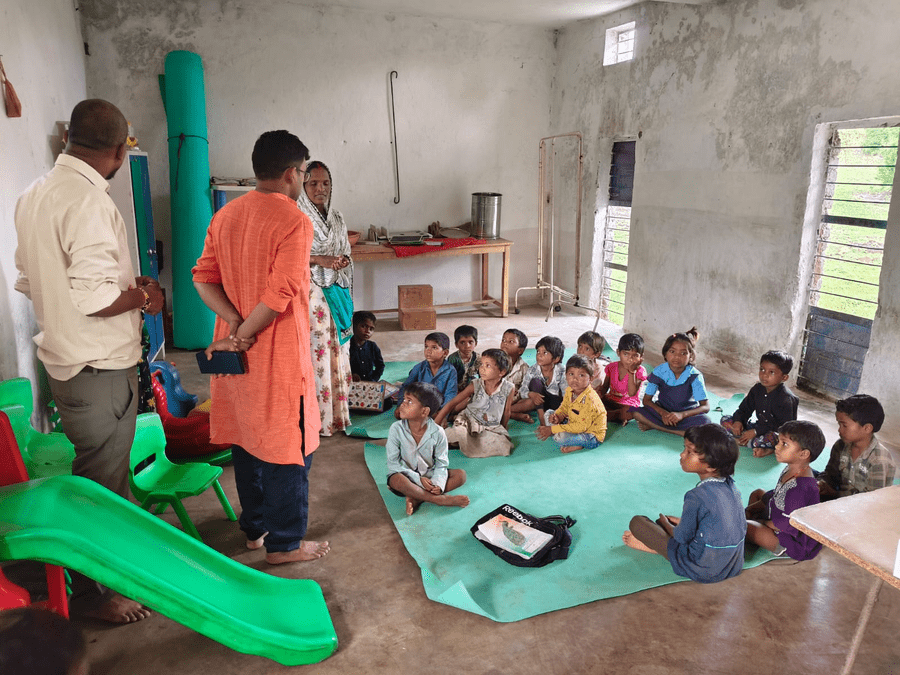
The Phulwari Didi welcomed us with the quiet confidence of someone who had repeated these routines hundreds of times.
Then she showed us her records. Medicine records. Nutrition. Attendance. Field visits. Ration. Everything was meticulously documented.
In cities, we often assume discipline comes from technology. Here, discipline came from ownership.
No dashboards. No software. Just commitment.
I found myself writing a small note in the visitor register. A simple thank you — which somehow felt inadequate for the kind of amazing work that I experienced.
Lunch Beside the Waterfall
Lunch happened much later than expected. We sat beside the waterfall. Driver. Field staff. Everyone eating the same food. No hierarchy. No VIP arrangements — something much better than that. Just people sharing a meal after a long day of work.
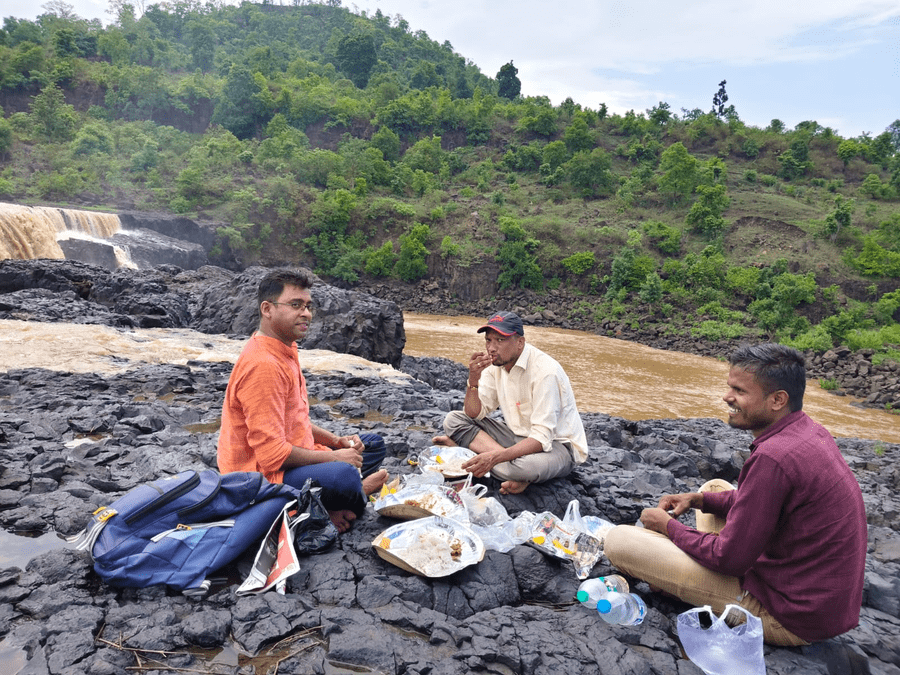
Sometimes organisations reveal themselves not in boardrooms but during lunch.
Watching the team laugh with each other, discussing villages, patients and tomorrow's plans, I realised why institutions like JSS survive for decades.
People don't stay because the work is easy. They stay because the work has meaning.
The India We Rarely Hear About
During those two days, I kept thinking about something else.
Most of us—including me—know remarkably little about this India.
We read about healthcare only when there is a crisis. We celebrate billion-dollar hospitals. AI diagnostics. Robotic surgeries. Medical breakthroughs.
But somewhere inside forests like these, thousands of health workers wake up every morning, travel impossible roads, visit remote villages, maintain handwritten registers, earn modest salaries and quietly prevent illnesses that never become headlines.
If they succeed, nothing dramatic happens. Children remain healthy. Pregnancies remain safe. Epilepsy gets treated. Sickle cell disease is diagnosed early. Nutrition improves.
The absence of tragedy rarely becomes news. Perhaps that is why we rarely hear these stories.
What Technology Can and Cannot Do
As someone working with Samanvay and Avni, I also couldn't help reflecting on technology.
People often ask whether technology can solve healthcare. After this visit, I think that's the wrong question.
Technology doesn't solve healthcare. People do. Technology simply helps good people do their work better.
When I saw community health workers maintaining detailed records, visiting households and following up with families over months and years, I wasn't thinking about apps or software.
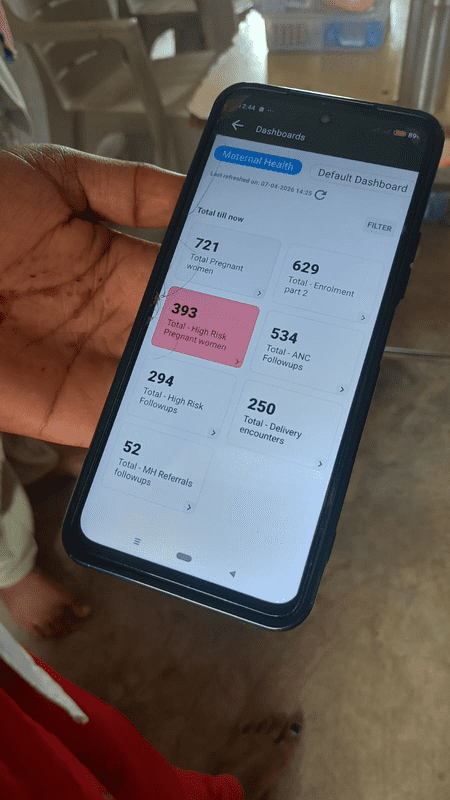
I was thinking about trust.
Technology can digitise data. It cannot replace relationships.
And public health, at its core, is built on relationships.
The Train Back
When I boarded the train back, the forests looked the same.
But I wasn't. I had travelled expecting to understand rural healthcare.
Instead, I left with a renewed respect for the people who make it possible.
Doctors. Nurses. Community health workers. Drivers. Field coordinators. Anganwadi workers. ASHAs. Phulwari Didis.
People whose names most of us will never know. Yet whose work quietly shapes the lives of thousands.
There are some journeys that add information. And then there are journeys that quietly change how you see the world.
For me, Anuppur was the latter.