My Three Weeks With JSS: A Ground Reality Reflection
December 02, 2025 by Md Taqi Afsar
A firsthand reflection on three weeks spent with JSS, observing the realities of public health work, the challenges faced by frontline teams, and the importance of technology like Avni in fitting real environments.
My time with JSS began on the road to Karanjia, where the CPHC program is set to begin. The PHC visit offered an early sense of the realities ahead—limited staff, stretched frontline teams, and basic infrastructure holding up a large share of community health work. Later that day, meeting villagers gave a more personal view of the challenges they face and the kind of support they feel could make a difference. That first day shaped the rest of the visit.
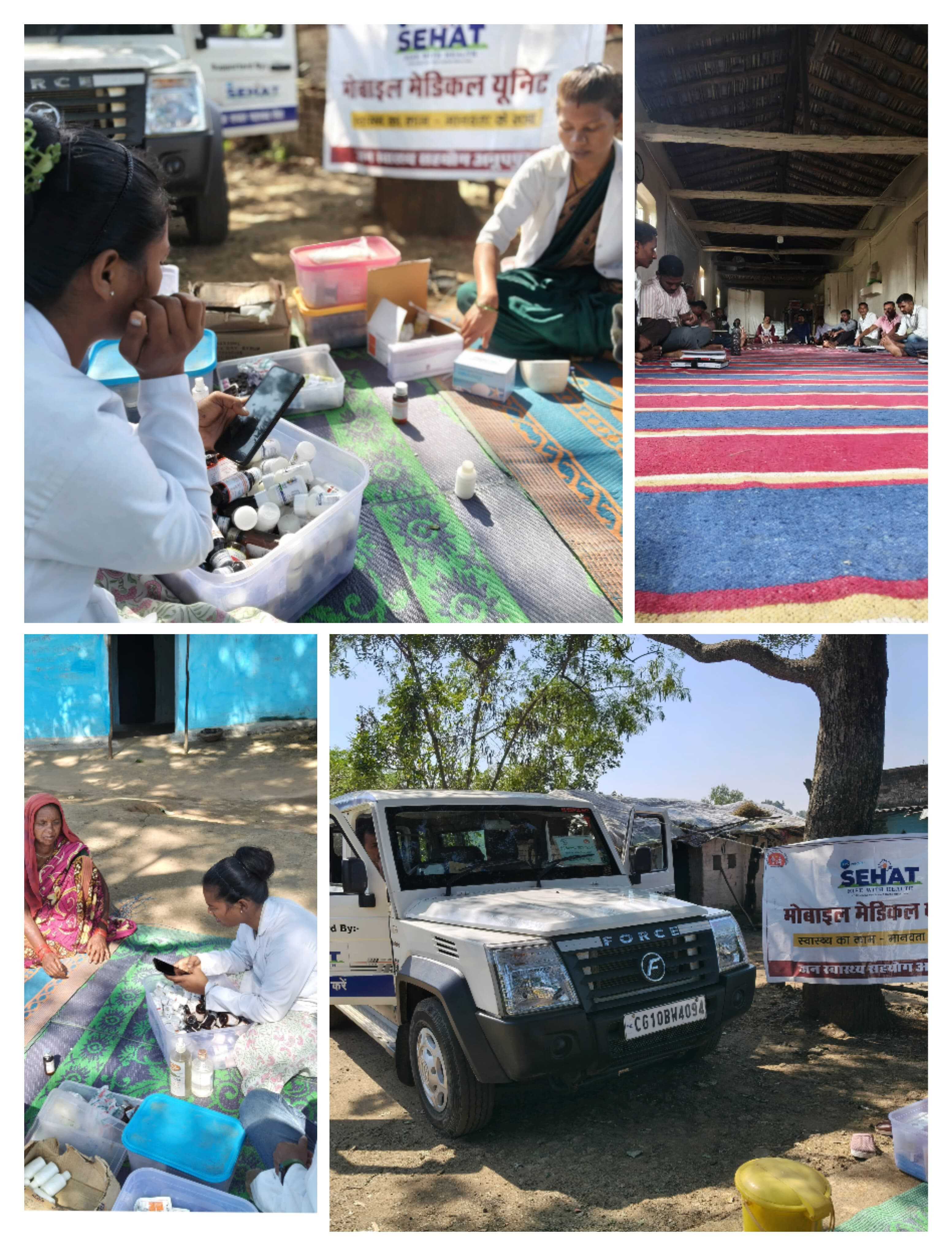
Seeing healthcare up close: Mobile Medical Unit providing essential services under a tree.
Field Journey: Seeing Healthcare Up Close
Across the next few days, I saw different parts of public health work unfold. At a school, a sickle cell screening drive was in progress—students moving in one by one, samples being sorted for confirmatory testing. In another village, the Mobile Medical Unit had set up under a large tree. Two ANMs and a lab technician handled BP checks, RBS, haemoglobin tests, basic treatments, and referrals. For more detailed insights from this journey, click here to read more. The MMU typically covers two villages a day and visits each Phulwari centre once a month to review children, medicines, and sanitation. The setup was minimal, yet it reached people who may not otherwise access care.
Some moments simply stayed with me because of their setting. Travelling to Bahmini meant crossing a river—routine for the team but memorable for me. In Bahmini, I joined Chandrima, Prafull, Ravi, and Minal in discussions with the field staff. Their feedback was honest and grounded in their day-to-day work. Later, conversations with Phulwari supervisors became another highlight. Their clarity about their work and their confidence in how Avni supports them stood out.
Observations From the Field and Office
Back in the Anuppur office, I began what I had been looking forward to the most—spending time with Avni’s frontline users. ANMs, supervisors, coordinators, and program staff walked me through how they use Avni in their day-to-day work. Sitting beside them as they entered data and navigated different workflows helped me understand the practical realities of field-based digital work—where network, workload, and on-the-ground situations shape how any system is experienced. These conversations helped me spot small opportunities to simplify steps, reduce friction, and make their routines even smoother.
I also spent considerable time with Ravi and Minal, who were central to many of the discussions. They worked with me closely during the Phulwari review meetings, led the conversations, and helped surface the practical issues that teams deal with. These sessions added depth to my understanding of how Avni is used across programs and where improvements could make a difference.
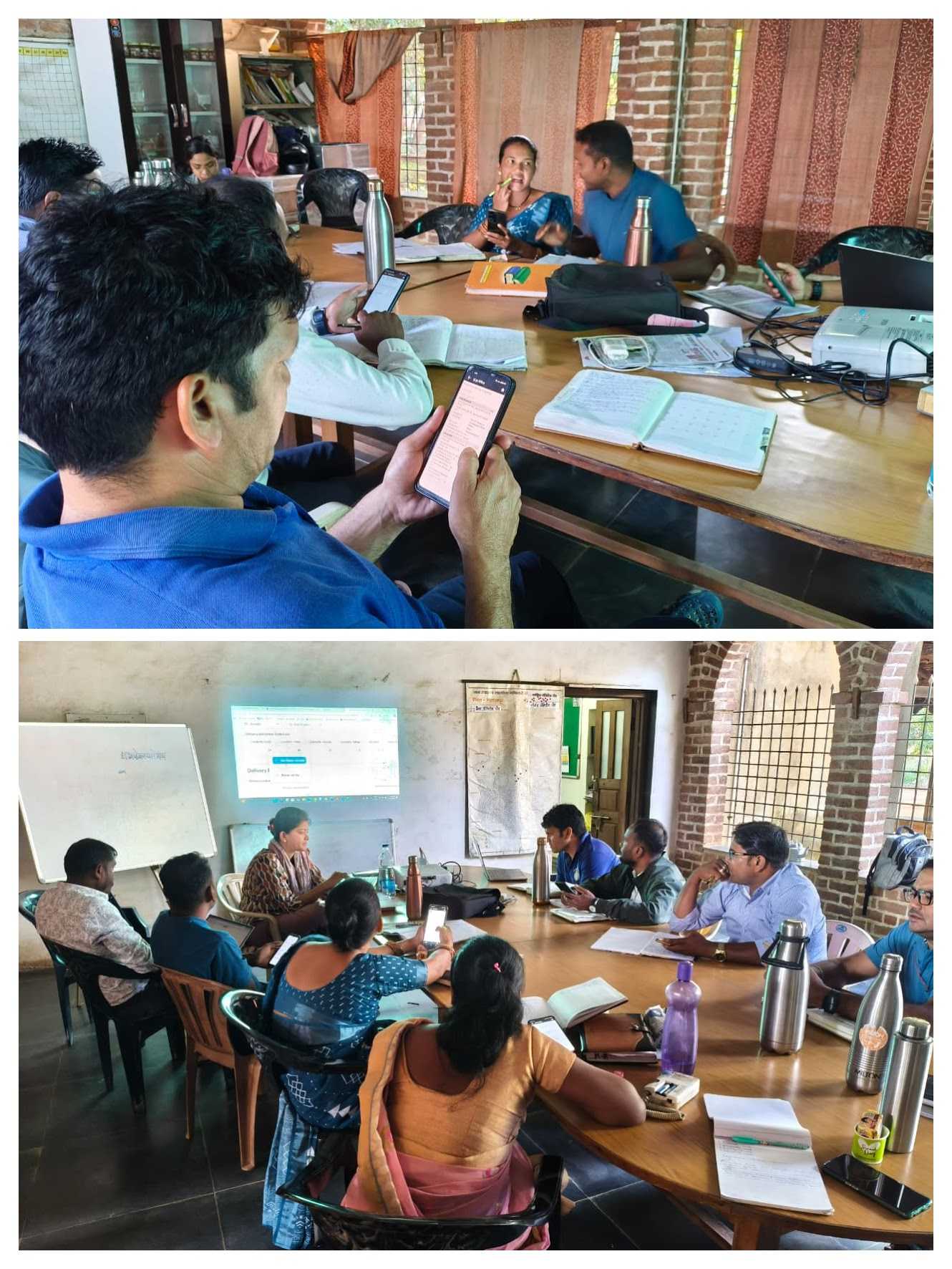
Moments from the field: Discussions with Ravi, Minal, and the team during Phulwari review meetings.
Time at the JSS campus added another layer of perspective. A day at the OPD, where nearly 700 tokens were handled, showed the scale of work the team manages daily. Watching Bahmni run smoothly on a local network gave me a sense of what strong offline-first systems look like. When Dr Gajanan explained Bahmni’s patient identification workflow compared to Avni’s, the integration gap became clear. Field history sits in Avni; clinical history sits in Bahmni. Without a shared reference, context gets lost, and patients often cannot recall earlier diagnoses. It highlighted the importance of connecting these systems more meaningfully.
Lighter Moments That Balanced the Days
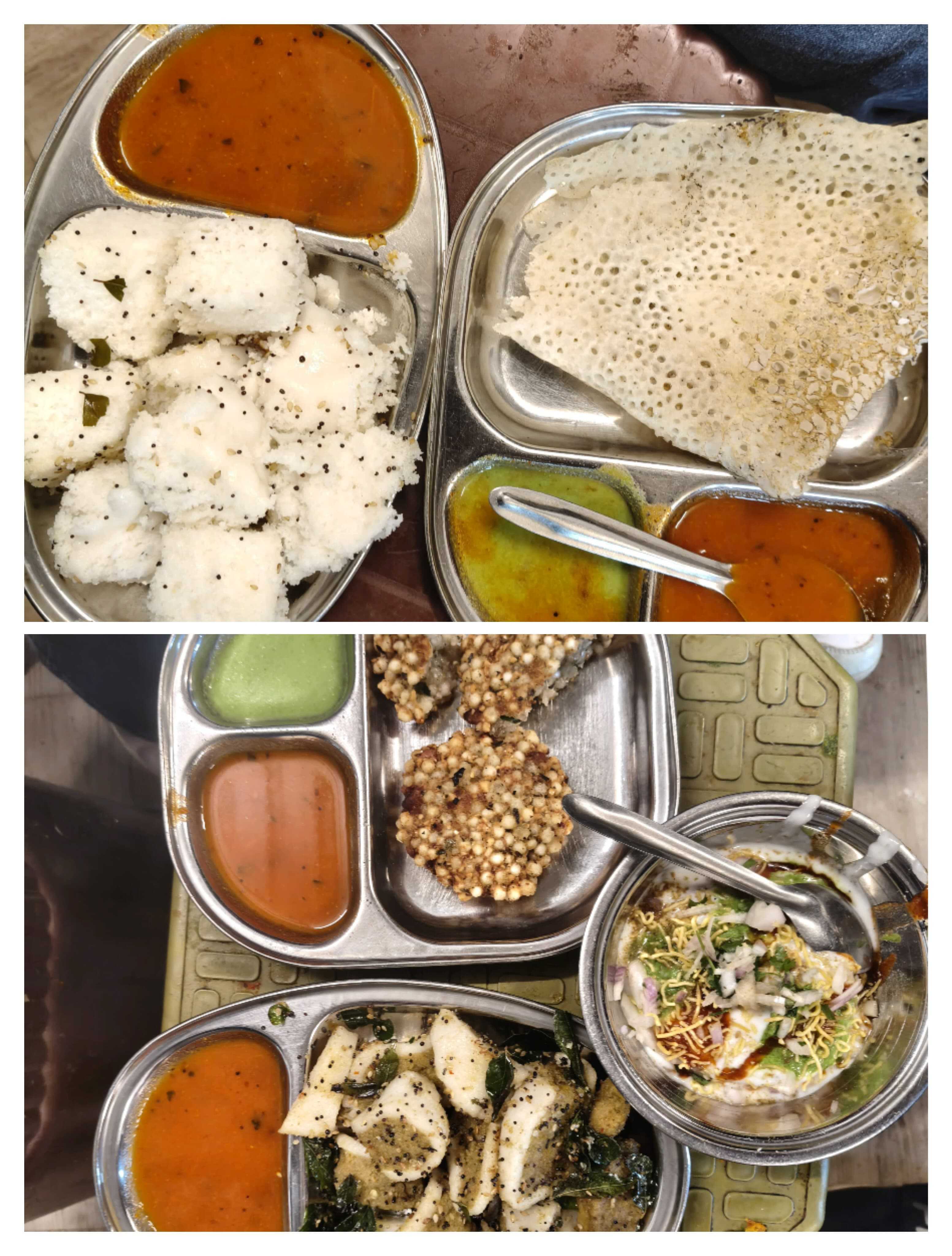
A lighter moment: Enjoying local delicacies and the scenic surroundings during the trip.
Amid all the travel and conversations, a few lighter moments made the trip feel complete. Breakfast at Gadh Kaleva quickly became a favourite—especially the dahi kachori and rice dhokla. One evening turned into a relaxed singing session with the doctors, with me offering “technical support” on the side.
Singing session at JSS
And on another day, I paused just to take in the scenery around me—a reminder of the environment that shapes so much of this work.
Breathtaking view at MP
What I’m Taking Back
The final stretch of my trip was spent with Ravi and Minal again—reviewing bugs, clarifying workflows, discussing redesigns, and collecting small but important suggestions from different program teams. These weren’t theoretical conversations. They were shaped by real tasks, real devices, and real constraints. That made them far more meaningful than any structured workshop could have been.
Looking back, these three weeks reinforced one simple truth: technology in public health matters only when it fits the lives of the people who use it. Watching a BP check under a tree, seeing the pace of an OPD day, or sitting beside an ANM trying repeatedly to sync data—all of it made the context real. It clarified why even small design choices matter and why staying close to the field will always be important.
The visit gave me perspective, clarity, and a renewed sense of responsibility. Avni’s strength has always come from understanding real environments and real users. Being on the ground at JSS made that even more evident. The lessons from these weeks will guide my work going forward.